
Principles: Value questions more than answers
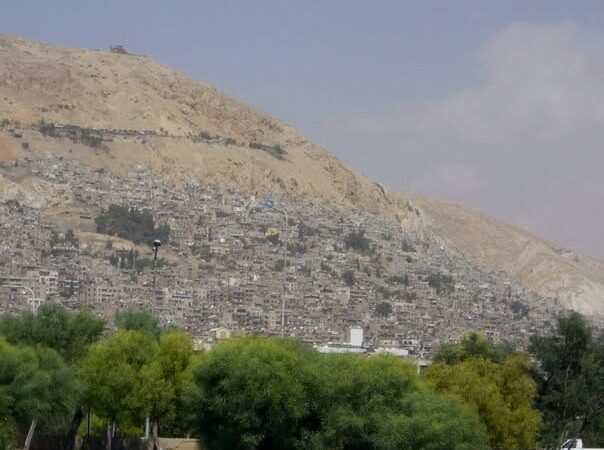
In 2008, I moved to Syria to study Arabic. I left in 2011. During the 13 years of war that followed, I watched from a distance, through headlines and messages from friends, and I didn’t expect to see it end in a way I could feel good about.
Then, in December 2024, the ruling regime fell. This brought surprise, relief, and grief for what Syrians endured. I also felt something I hadn’t felt about Syria in a long time: hope.
Hope, at least in my world, demands action. This month I went to the MedGlobal conference here in Chicago to listen and learn. MedGlobal provides free, sustainable healthcare services to refugees, displaced persons, and other vulnerable communities in crisis areas and low-resource settings, including Syria, Gaza, Sudan, Ukraine, Colombia, Ecuador, and more. I wanted to hear how the people rebuilding Syria see the road ahead, who is doing what, and what someone like me, a non-Syrian, can do. Here’s what I heard, and three ways the rest of us can help.
1. Give to the basics
The most useful dollars in Syria right now buy things that won’t make the news, such as promoting handwashing programs or support for rebuilding primary care facilities and midwifery clinics. Unfortunately, it’s easier to raise money for high-profile projects. For example, Dr. Zaher Sahloul, a Syria American and MedGlobal’s president, described an ill-informed push to start a liver transplant program while 60% of Syria’s 2,000 pre-war primary health centers lie destroyed. The country may need liver transplant capabilities, but the challenge with these types of projects is that they risk building a parallel healthcare system run by NGOs instead of meeting the ministry of health and local governments where they are to sustainably improve their entire system.
Isra Shakir showed what a basic investment can do. Her coalition, Every Pregnancy, improves maternal health in Syria. In a MedGlobal-supported clinic, the only clinic for more than 120 miles, she met a woman who had lost four pregnancies. A simple blood test found the cause. When Isra spoke with her again years later, she was expecting her second healthy baby. With the fall of the regime, Every Pregnancy is ramping up investment. They sent $11 million into Syrian maternal health this year, including more than 100 portable ultrasound machines—basic technology that can make a huge difference in maternal outcomes.
2. Invest in people
A medical mission treats patients for a week. Training the people who stay treats patients for decades. Dr. Amer Zeni, a colorectal surgeon from Michigan, has spent two years trying to restart surgical training at Homs University in western Syria. Weekly online lectures failed because of low attendance, so his team switched to on-site workshops and donated equipment to perform laparoscopic surgeries. His advice to visiting surgeons is to ramp up training efforts by doing two cases a day instead of four and letting the residents operate. While each visiting surgeon would not be able to serve as many people, the residents who are acquiring the skills will be able to serve many more once they acquired the skills. The residents were eager to learn and requested further training. They recently called him: “We need you to come for a week and just do lap surgeries every day with us.”
Training also works beyond surgery. Dr. Steven Weine’s team trained Syrian clinicians in Homs through a joint MedGlobal and University of Illinois Chicago talk therapy program. The training supported treatment of torture survivors. Of the more than 800 people they’ve assessed, about two-thirds moved below clinical levels of depression, PTSD, and anxiety through this program.
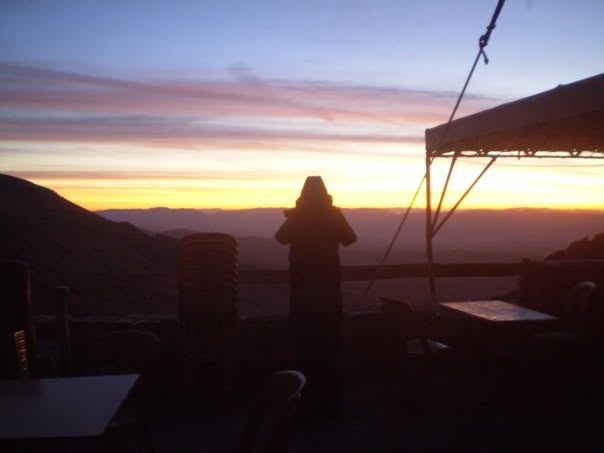
The sunrise from Mar Musa, a monastery outside of the city of Homs in 2008.
3. Keep Syria in the conversation
Funding follows attention, and Syria has lost attention to newer crises just as recovery begins. MedGlobal’s president said the most important thing a supporter can do is tell their story.
Some of those stories are about the missing. Syria’s National Commission for Missing Persons, created in May 2025, launched a national registry this August. One recent count puts the number of people forcibly disappeared since 2011 at more than 177,000. Dr. Weine said their families need a voice in transitional justice. Keeping their stories in front of governments and donors is part of how they get one.
Other stories are here in Chicago. Maya Atassi, executive director of the Syrian Community Network in Edgewater, explained that as of October 1, adults with refugee status lost Medicaid under last year’s federal budget law. Refugees can apply for a green card a year after arrival, yet her organization has nearly 800 applications pending, some for more than two years. She described a 19-year-old with Duchenne muscular dystrophy who aged out of state coverage and lost the care he depends on.
Share what you learn, take it to your dinner table, and call your members of Congress about the importance of benefits for refugees.
One life at a time
What I took home from this conference is that Syria is at a critical moment, and the need now is concrete. It’s soap and basic supplies, medical residents in need of training, and support for a family who is still missing a son or a refugee in Chicago waiting on a green card.
One speaker put it this way: “We don’t have to fix the world.” Each of us can make a real difference in one or two lives, whether that’s a funding a Syrian’s college tuition or a resident learning a new surgery. If enough of us do that, he said, it changes the country. While he was speaking to the Syrian diaspora in the room, it applies to all of us. We each need to do what we can.
