Lessons Learned from Putting Grantees First
Edward W. Hazen Foundation
Read More about Lessons Learned from Putting Grantees First

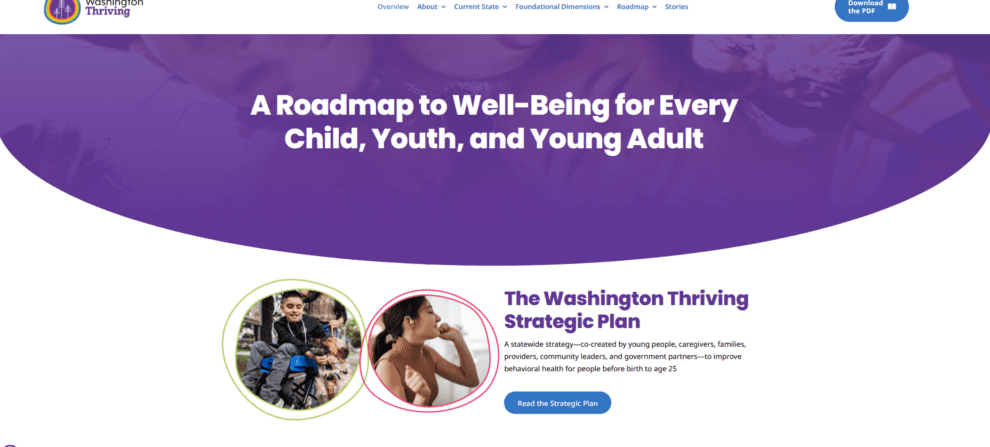
In Washington State, too many children, youth, and young adults who need behavioral health support are left waiting—or going without care entirely. Families seeking help often encounter long delays, limited options, or systems that are difficult to navigate, especially if they face barriers related to income, geography, race, language, disability, or insurance status. For young people whose needs go unmet, the consequences can be lifelong.
Washington Thriving is a statewide effort of caregivers, young people, legislators, state agency leaders, community partners, and people with lived experience working to change that reality. Together, they are advancing a vision in which every young person—from before birth through age 25—and their caregivers can access behavioral health care and support, including prevention, treatment, crisis response, and long-term well-being.
In August of 2025, Minerva partnered with Washington Thriving as the effort sought to launch a bold, systems-level strategic plan and convince legislators to adopt it as the state’s framework for future action. Our role was to help communicate Washington Thriving’s ambitious vision for behavioral health care via a digital presence, a designed plan, and promotional materials to build momentum for change across the state.

Washington Thriving’s Strategic Plan was intentionally ambitious. It confronts the root causes of Washington State’s behavioral health challenges and outlines a comprehensive, cross-sector system of care centered on the needs of children, youth, young adults, and their families. The plan reflects years of research, collaboration, and lived experience—and its strength lies in that depth.
But that same strength also posed a challenge. The plan needed to speak to many audiences at once—caregivers and young people, policymakers, advocates, funders, and system leaders with different priorities, levels of familiarity, and decision-making power. Without clear, accessible framing, there was a real risk that the plan would be seen as overwhelming, academic, or disconnected from the urgent decisions facing the state.
To build the momentum needed for change, Washington Thriving needed to translate a complex, long-term vision into a clear and actionable roadmap—without oversimplifying the problem or compromising its equity-centered approach.
Minerva’s work focused on turning the complex, equity-centered strategic plan into a navigable and visually compelling document, website, and set of promotional tools that could be used to build alignment, mobilize advocates, and influence decision-makers across Washington State.
We began by partnering closely with Washington Thriving to develop a messaging and promotion strategy that articulated not just what the plan proposed, but why it mattered—and who needed to act. This included shaping language that honored lived experience and systems-level complexity while remaining accessible to its intended audiences.
As Washington Thriving completed the content of the plan, Minerva served as the connector across partners, coordinating with RRD Design and Howle Creative to create a compelling visual version of the plan and a website that would amplify it. Minerva was tasked with ensuring alignment between strategy, design, and digital execution. This role required ongoing translation between disciplines—helping designers and developers understand the plan’s goals and audiences, while ensuring that the final products remained true to Washington Thriving’s vision and usable for real-world advocacy efforts. Throughout this process, materials were refined through multiple rounds of review with Washington Thriving co-chairs and the team at Behavioral Health Catalyst and the Washington Health Care Authority that had supported the development of the plan.
At the same time, Minerva led implementation of the promotion strategy, which included a media outreach plan and developing practical, audience-specific tools to support uptake and action. These included one-pagers tailored to philanthropic and policy audiences, a social media toolkit for advocates, a press release paired with targeted media pitching, and additional materials designed to help partners communicate consistently and confidently about the Strategic Plan. Minerva also conducted two messaging training sessions for a dozen spokespeople, offering language, tools, and opportunities to practice championing the plan among their networks.
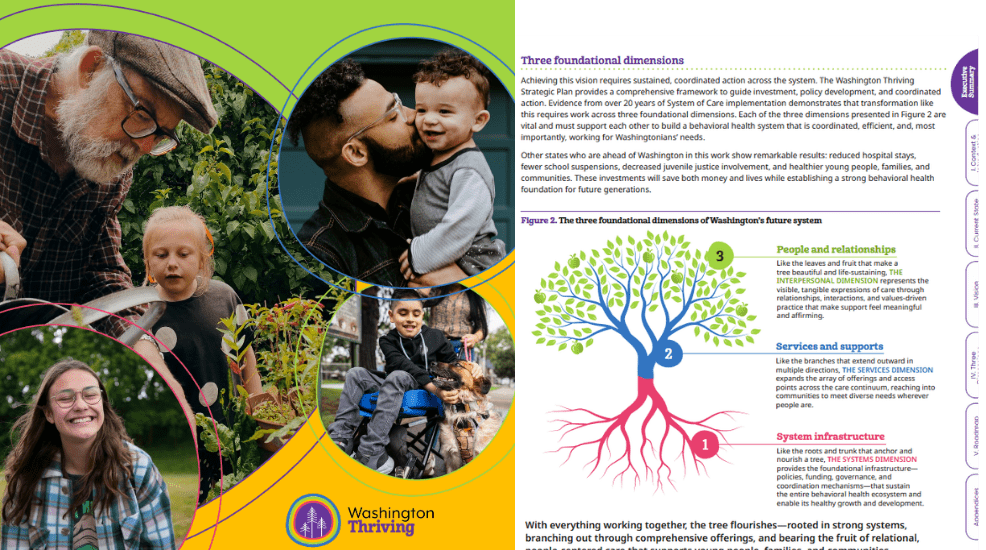
By the close of the engagement, Washington Thriving had a set of tools that support the promotion of their vision. The Strategic Plan was transformed from a text-only document into a more digestible visual document and online presence that decision-makers and advocates can use to understand the issues facing Washington’s behavioral health system, see themselves in the solution, and take action.
Through close collaboration with RRD Design, the Strategic Plan’s visual language and structure were refined to make complex sections easier to navigate. Clear iconography, diagrams, and visualizations helped readers better grasp the proposed system of care and its foundational dimensions.
In parallel, Minerva and Howle Creative brought the plan to life digitally, translating its core ideas into a website designed to inform and engage. Summarized sections, cross-linked stories, and highlighted examples of bright spots and promising practices allowed users to move between vision and potential real-world application. This allows the plan to function as an educational resource and an advocacy tool.
In early 2026, lawmakers put forth HB2429, a bill to implement the Washington Thriving Strategic Plan. This bill was unanimously passed in the House and Senate, and the Governor signed it on March 18, 2026.